



Beyond APIs: Rethinking Integration in the Age of Agents
APIs power integration, but autonomous AI needs more. Agent protocols like A2A and MCP enable collaboration, shared context, and scalable intelligence, shifting enterprises from static workflows to interoperable, real-time systems of thinking, coordinating digital agents.
Introduction: From APIs to Autonomous Agents
For decades, APIs have been the backbone of digital systems. They enabled applications to communicate, integrate, and scale. APIs defined the language of software integration in a world where systems were largely deterministic, workflows were predefined, and logic was explicitly coded.
But artificial intelligence is changing the nature of software itself.
As artificial intelligence evolves from static models to autonomous, decision-making systems, APIs alone are no longer enough.
We are entering a new paradigm where AI agents don’t just call APIs they collaborate, negotiate, and reason together.
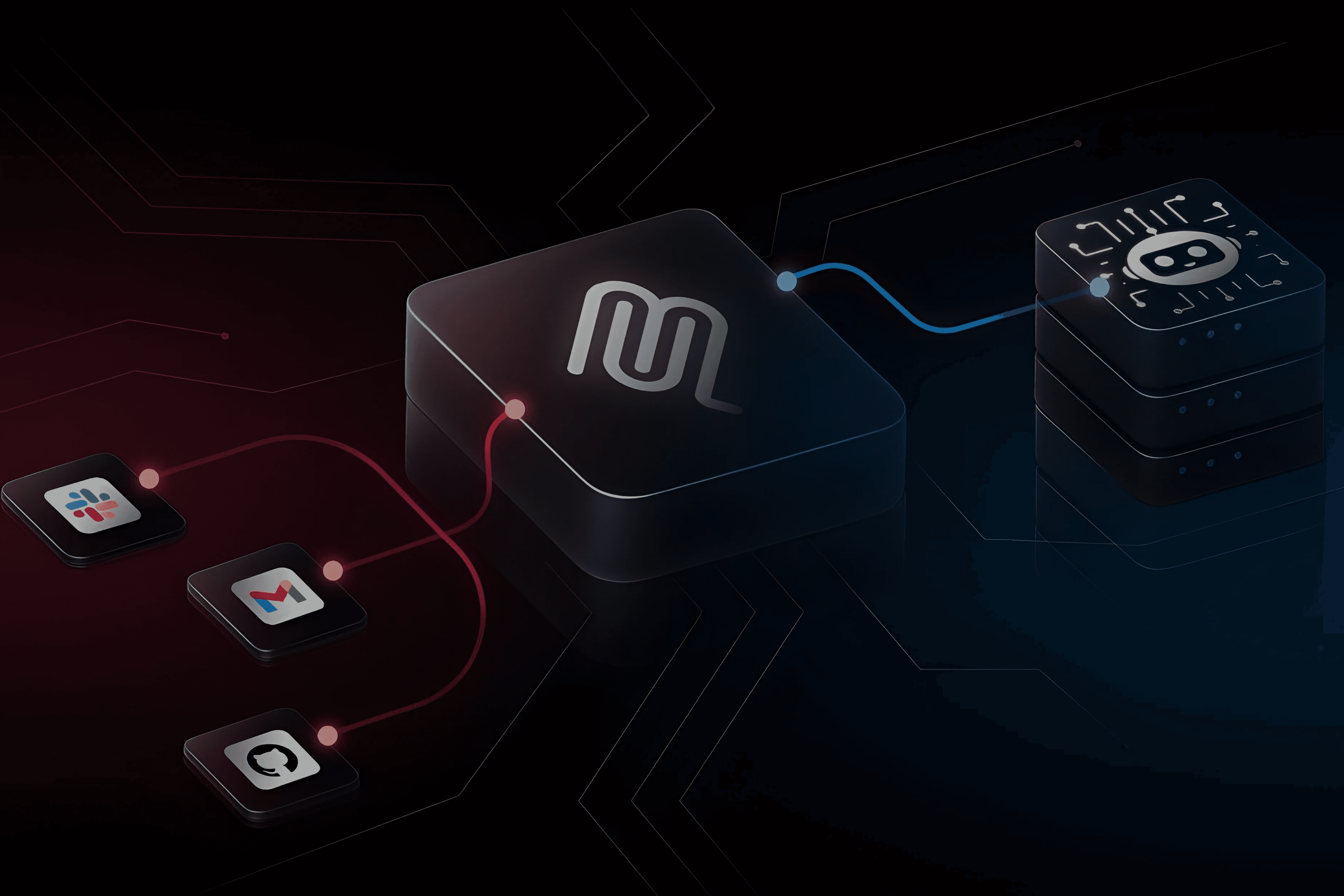
This shift is giving rise to agent protocols and new standards that define how intelligent agents interact with each other, with models, and with enterprise systems. Among them, Agent2Agent (A2A) and Model Context Protocol (MCP) are emerging as foundational pillars for interoperable AI ecosystems.
Together, they signal a move beyond APIs toward interoperable, multi-agent intelligence.
The Limits of Traditional APIs in the AI Era
APIs were designed for a very different kind of system:
- Request → Response
- Fixed endpoints
- Predefined schemas
- Deterministic logic
They excel in environments where inputs, outputs, and flows are known in advance.
AI agents, however operate under fundamentally different assumptions:
- They reason dynamically rather than execute fixed logic
- They adapt continuously to changing context
- They collaborate with other agents
- They operate across multiple tools, models, and environments
In multi-agent systems, APIs become constrained. They lack semantics, context awareness, and autonomy.
As intelligence becomes more autonomous and distributed, integration can no longer be reduced to function calls.
This is where agent protocols come into play.
What Are Agent Protocols?
Agent protocols define how intelligent agents communicate, coordinate, and collaborate in complex environments.
Unlike APIs which expose functions, agent protocols enable relationships.
They support:
- Shared understanding: goals, context, memory, and state
- Delegation and negotiation: agents assigning tasks to other agents
- Continuous interaction: not just one-time calls, but evolving conversations
- Interoperability: across models, tools, vendors, and platforms
Think of APIs as roads. Agent protocols are the traffic rules, languages, and coordination systems that make autonomous vehicles possible.
Without protocols, agents may exist but they cannot operate safely, efficiently, or at scale.
Agent2Agent: The Language of AI Collaboration
Agent2Agent (A2A) protocols define how autonomous agents interact with one another.
They provide a shared framework for collaboration, role definition, and trust—turning isolated agents into coordinated systems.
Key Capabilities of A2A
- Task delegation between agents
- Role-based collaboration (planner, executor, validator, reviewer)
- Multi-agent workflows spanning systems and domains
- Feedback loops, verification, and trust mechanisms
A Real-World Enterprise Example
Consider a complex business problem inside an enterprise:
- A Planning Agent decomposes the problem into actionable steps
- A Data Agent retrieves and cleans relevant datasets
- A Model Agent runs predictions or simulations
- A Compliance Agent validates outputs against regulatory constraints
- A Reporting Agent synthesizes insights for stakeholders
Rather than relying on a single monolithic AI system, the organization operates a distributed intelligence network, a team of digital workers collaborating through A2A protocols.
A2A transforms AI from tools into teams of digital workers.
Model Context Protocol: Standardizing AI Context
If A2A defines how agents communicate with each other, the Model Context Protocol (MCP) defines how agents communicate with models.
MCP standardizes the most fragile and fragmented layer of modern AI systems: context.
It provides a unified way to manage:
- Context representation
- Memory structures
- Tool access
- Prompt orchestration
- State and lifecycle management
Why MCP Matters
Today, nearly every AI system reinvents context handling:
- Custom prompt templates
- Proprietary memory formats
- One-off tool integrations
- Tight coupling between models and infrastructure
The result is brittle architectures, high maintenance costs, and deep vendor lock-in.
MCP addresses this by creating a universal interface between models and context.
With MCP, enterprises can:
- Swap models without rewriting application logic
- Maintain consistent behavior across agents
- Build scalable, model-agnostic AI pipelines
- Future-proof systems against rapid model evolution
In short, MCP turns context from an implementation detail into a first-class architectural layer.
What Enterprises Must Do
For enterprises, agent protocols unlock:
1.Scalable AI Orchestration
Enterprises can deploy hundreds or thousands of agents working in parallel.
2. Interoperability Across AI Systems
Different models, vendors, and tools can coexist within a unified framework.
3. Faster Innovation Cycles
Teams build agent workflows instead of rewriting integrations.
4. Governance and Compliance
Agent protocols enable traceability, accountability, and control.
5. True Autonomous Systems
From smart cities to finance to healthcare, agent-driven systems can operate with minimal human intervention.
The enterprises that understand this shift today will lead tomorrow’s AI-driven world.
Final Thoughts
APIs will not disappear. They remain essential for accessing services and data.
But in the age of autonomous agents, APIs are no longer sufficient as the primary integration primitive.
The future belongs to systems that:
- Coordinate rather than merely connect
- Share intent, not just inputs
- Collaborate continuously instead of executing isolated calls
Agent protocols like A2A and MCP represent the missing layer, one that enables intelligence to scale across agents, models, and enterprises.
The shift beyond APIs is not just a technical evolution. It is a redefinition of how software thinks, communicates, and works together. The question is no longer, “How do we orchestrate workflows?” but “How do we build enterprises that think in real time?”
At M37Labs, we design and build enterprise-grade orchestration layers that unlock the full potential of AI-driven innovation.