


Small Language Models: Redefining Intelligence for Autonomous Agents
Small Language Models (SLMs) power agentic AI with efficiency, affordability, and modularity. Operating on consumer hardware, they cut costs, boost productivity, and democratize access, enabling enterprises to scale intelligent, specialized workflows sustainably.
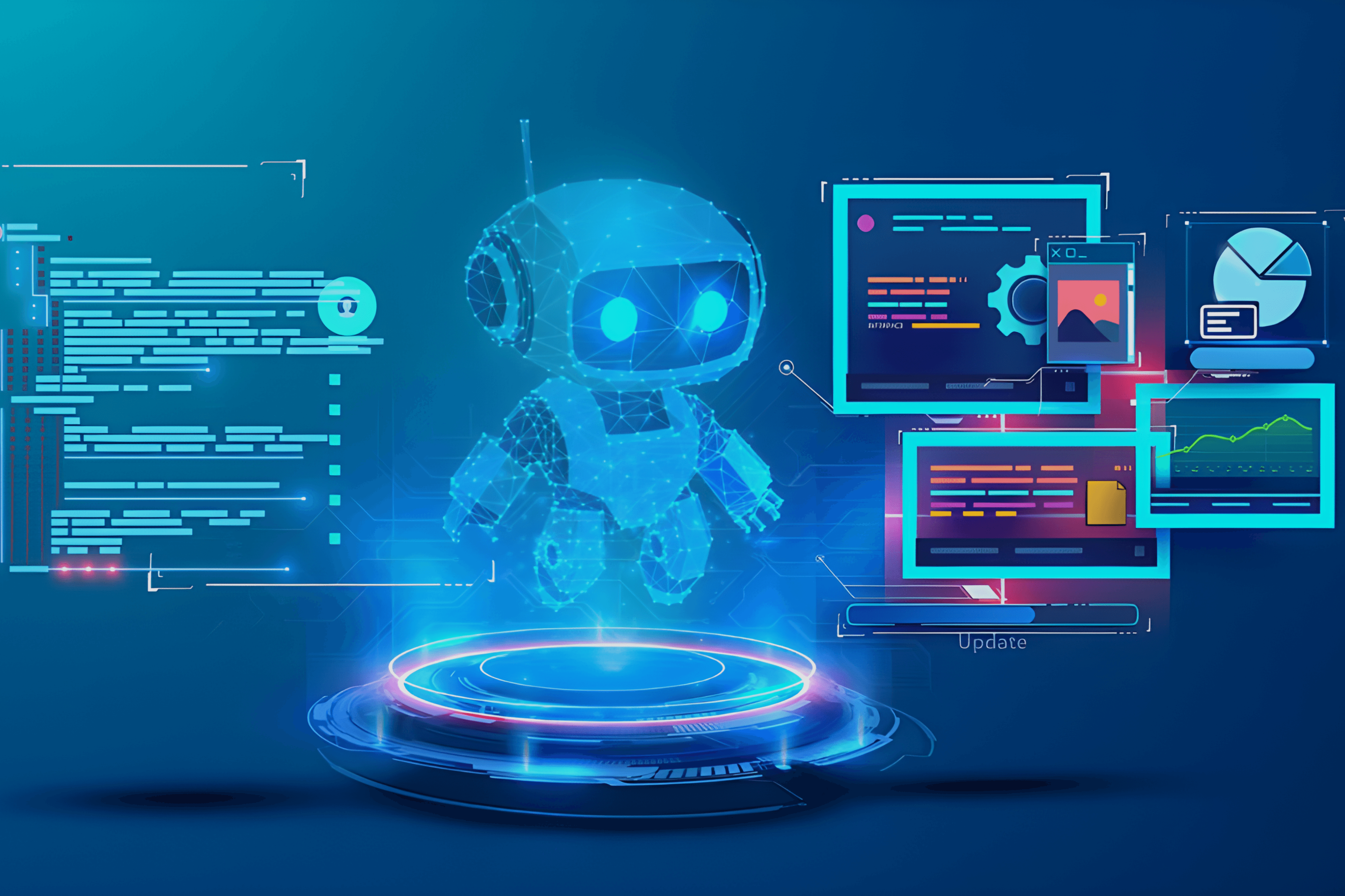
Unlike LLMs with hundreds of billions of parameters, SLMs are leaner, typically ranging from 3 to 10 billion parameters. They are designed to run efficiently on consumer-grade hardware, offering fast responses suitable for single-user workloads. Their practicality allows organizations to execute powerful models locally without massive infrastructure, democratizing access to agentic AI.
In practice, an SLM can run on a laptop, a consumer-grade GPU, or even a smartphone, making AI more personal and accessible. This shift represents a democratization of advanced AI capabilities, reducing dependency on centralized cloud infrastructure and enhancing privacy by keeping computation local. While impressive, LLMs are expensive, power-hungry, and often excessive for the repetitive, specialized tasks agents perform. This is where Small Language Models (SLMs) step in, reshaping the efficiency, economics, and accessibility of agentic AI.
Why SLMs Are Ideal for Agentic AI
Agentic AI relies on breaking down big tasks into smaller subtasks. Consider booking a flight: the process involves checking schedules, parsing preferences, logging in, and confirming details. Many of these steps don’t require a massive LLM. Instead, they benefit from lightweight, specialized SLMs.
Key advantages include:
- Task Fit: SLMs excel at common agent activities such as API calls, SQL generation, structured reasoning, and intent classification.
- Efficiency: Faster response times, lower compute demand, and predictable fine-tuning make them ideal for controlled environments.
- Cost Savings: Running an SLM can reduce expenses by 10 to 30× compared to an LLM, significantly cutting cloud bills and energy usage.
- Simplicity: Since agents often perform specialized, repeatable tasks, SLMs are already highly effective in these scenarios.
- Modularity: Multiple SLMs can act as specialized agents within a system, each designed for a specific function, ensuring flexibility and scalability.
Real-World Impact of SLMs
Recent advancements demonstrate that small models can deliver outsized performance:
- Microsoft’s Phi-4-mini-instruct and Phi-3.5-Mini: Compact, high-quality models excelling in reasoning and coding tasks, showing that efficiency and capability can coexist.
- Google’s Gemma-3-4B-it: A lightweight multimodal model capable of handling both text and images, ideal for experimentation and real-world agentic applications.
- SmolLM3-3B (HuggingFaceTB): Open-source and optimized for coding, reasoning, and tool use, making it highly adaptable for specialized agent workflows.
- NVIDIA Nemotron-H: Hybrid Mamba-Transformer models that rival or surpass 30B LLMs in instruction following and tool use, while delivering drastically lower inference costs.
These results highlight how well-designed SLMs outperform expectations, making them practical choices for agentic workflows in enterprises, startups, and even consumer applications.
Why Agentic AI Is the Next Enterprise Imperative
The value of SLMs becomes even clearer when we look at the measurable impact of agentic AI in practice. Industry data from 2025 highlights just how transformative these systems are:
- Agentic AI cuts human task time by up to 86% in complex workflows, streamlining operations and reducing manual bottlenecks.
- Over 60% of new enterprise AI deployments in 2025 include agentic capabilities, showing rapid mainstream adoption.
- Agentic AI systems complete up to 12× more multi-step tasks than standard LLM-driven setups.
- Agentic AI drives a 35% boost in autonomous robotic decision-making efficiency, enabling smarter, faster responses in manufacturing and logistics.
- More than 4.1 million developers have experimented with agentic AI frameworks, accelerating innovation across industries.
- Agentic AI now powers over 80,000 independent AI microbusinesses generating passive income, democratizing access to economic opportunity.
Agentic AI will be a critical driver of future growth, and enterprises must recognize the importance of SLMs in making it practical and scalable. SLMs are quickly becoming the go-to foundation for building effective agentic AI systems.
What Enterprises Must Do
To succeed in the era of agentic AI, enterprises need more than technology; they need a mindset shift. Small Language Models open the door to smarter, faster, and more adaptable ways of working, letting teams focus on what truly matters.
- Adopt a Modular Architecture: Move beyond the “one-size-fits-all” approach of using a single large LLM. Identify key business processes and deploy specialized SLM agents to handle tasks efficiently.
- Optimize for Cost and Efficiency: Treat this transition as both strategic and technological. Leverage SLMs to cut operational costs, reduce latency, and lower energy consumption.
- Implement a Hybrid Framework: Use LLMs for complex reasoning while assigning subtasks to SLMs. This combination ensures scalability, flexibility, and operational resilience.
- Invest in Fine-Tuning Expertise: Develop in-house capabilities or partner externally to fine-tune SLMs for domain-specific workflows, enabling rapid adaptation to evolving business needs.
- Ensure Responsible Deployment: Utilize the smaller footprint of SLMs to enhance data privacy, enable on-device inference, and comply with regional regulations.
- Develop an Agentic Culture: Equip teams with AI literacy, align leadership, and establish governance frameworks so employees can collaborate effectively with AI agents.
By following these steps, enterprises can unlock the full potential of agentic AI, driving efficiency, innovation, and sustainable growth in a competitive landscape.
Final Thoughts
Agentic AI is moving from predictive to proactive systems, automating workflows with speedy efficiency. Small Language Models are not just a lighter alternative, they are the backbone of practical, scalable agentic AI. By enabling specialized agents to autonomously handle multi-step workflows, SLMs make AI faster, more efficient, and accessible to enterprises of all sizes.
The real challenge isn’t creating smarter models, it’s building systems and cultures where humans and AI collaborate seamlessly.
In essence, the future of agentic AI isn’t just about bigger models. It's about small, modular, and highly capable systems. Enterprises that embrace SLM-first architectures early will unlock decisive advantages in efficiency, agility, and sustainability.
The question is no longer “Can AI automate processes?” but “How can AI uncover insights we never saw?”
At M37Labs, we work with forward-thinking organizations to integrate agentic AI, turning complexity into operational advantage and unlocking new levels of productivity.