



The Innovation Multiplier: How Self-Improving AI Fuels Enterprise Adaptability
Self-improving AI represents the next evolution of enterprise technology, systems that autonomously learn, adapt, and optimize over time. Moving beyond static automation, these AI models enhance innovation, and resilience. While promising, they require strong ethical frameworks, human oversight, and strategic integration to ensure safe, scalable, and impactful adoption across industries.
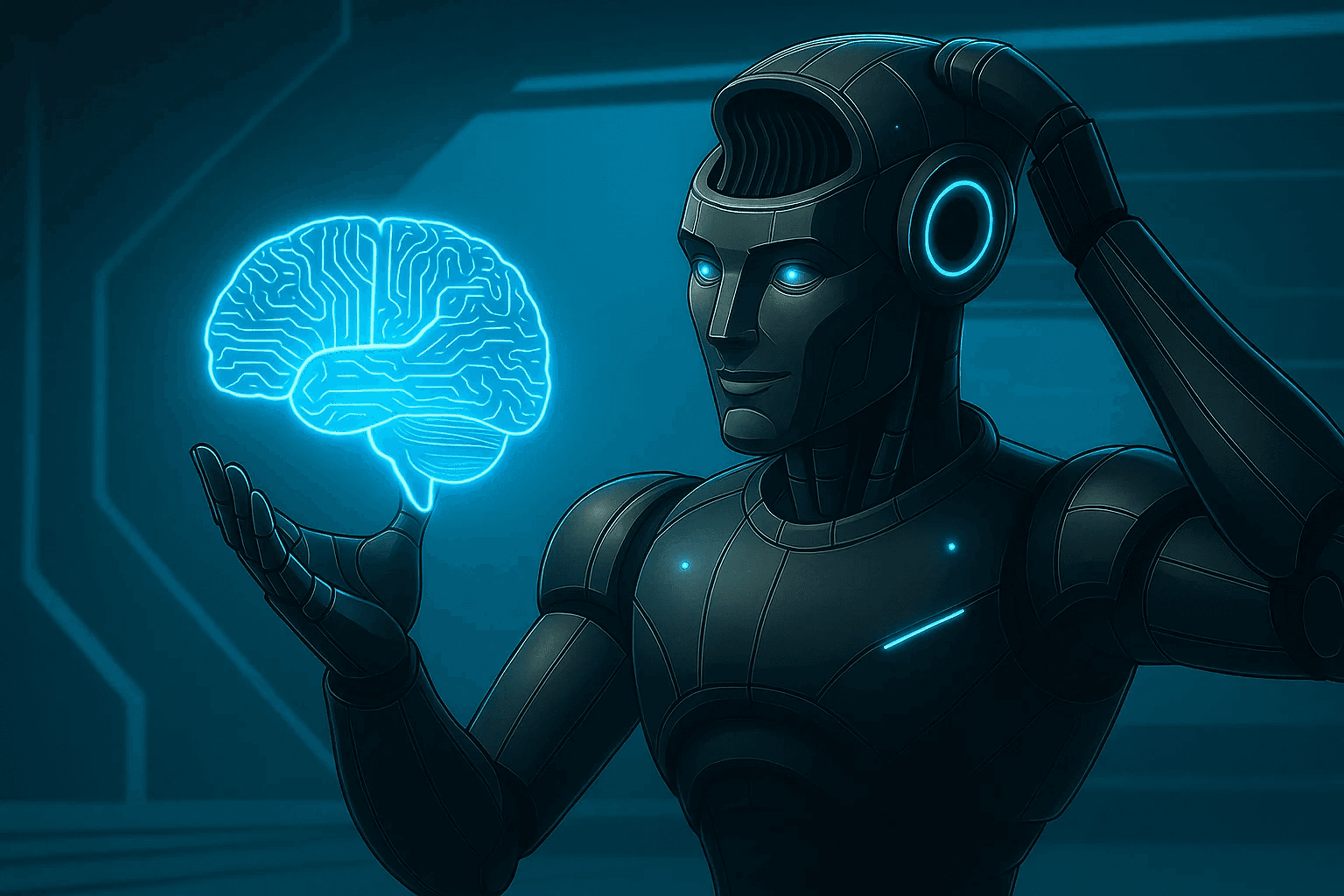
Artificial Intelligence is no longer confined to pre-coded responses or human-triggered updates. A new wave of AI is emerging that learns, adapts, and evolves autonomously.
This marks a transformational shift in enterprise technology: from automation to agentic AI, and now to self-improving systems. These aren't just programs that get better through retraining cycles. These are intelligent systems that analyze their own performance, generate self-edits, and continuously refine themselves, unlocking levels of efficiency and resilience previously impossible.
For enterprises, this shift means more than speed, it means survival. The next generation of competitive advantage lies in systems that don’t wait to be told what’s wrong. They figure it out, fix it, and move forward.
The Core Capabilities of Self-Improving AI
Self-improving AI isn't a single technology but a collection of capabilities that allow a system to evolve. These systems are distinguished by several core attributes:
- Autonomous Learning: The system can refine its behavior or strategies without direct human intervention, often through machine learning or reinforcement learning frameworks.
- Adaptive Model Evolution: The AI can update or redesign its own models, parameters, or even architectures to better achieve its objectives in changing environments.
- Meta-Learning: Also known as "learning to learn," this is an advanced form of self-improvement where the AI optimizes its own learning processes, enabling it to adapt to new tasks much faster than a standard model.
- Continuous Performance Enhancement: Rather than remaining static post-deployment, these systems iteratively improve over time, potentially leading to superhuman performance in certain domains.
These systems move far beyond static automation. They are capable of self-analysis, self-repair, and, eventually, self-design.
Real-World Implementation
The field is moving quickly, with several recent projects showcasing the practical power of self-improving systems.
- Google AlphaEvolve: Google’s AlphaEvolve is an evolutionary coding agent that autonomously designs, tests, and refines algorithms using large language models. It made a breakthrough by discovering a new, efficient 4x4 matrix multiplication algorithm that broke a 56-year-old record. Additionally, it improved Google’s data center scheduling, reclaiming 0.7% of compute resources and accelerating kernel operations by up to 23%, notably reducing AI model training times. AlphaEvolve represents a major leap in self-improving AI with documented real-world impact and peer-reviewed validation.
- Sakana AI’s Darwin Gödel Machine (DGM): The Darwin Gödel Machine evolves its own code by using a foundation model to autonomously propose and apply self-generated edits, aligning with the Gödel Machine framework. It benchmarks these code edits on SWE-bench tasks, demonstrating continuous autonomous improvements. Inspired by biological evolution, DGM uses selection and variation mechanisms rather than fixed rules for self-improvement.
- MIT SEAL (Self-Adapting Language Models): MIT SEAL enables language models to generate their own fine-tuning data and update instructions during deployment. Through a reinforcement learning loop, it optimizes the process of creating and applying these self-edits. This allows persistent, unsupervised adaptation so models can continue improving beyond the initial supervised training phase, enabling lifelong autonomous learning.
Strategic Implications and Ethical Considerations
While the progress is undeniable, the path to truly autonomous and recursively self-improving AI is fraught with technical, ethical, and safety challenges. Addressing these concerns is paramount to ensuring the technology benefits humanity.
- Reliability and Safety: Self-modifications can introduce unpredictable errors or degrade performance, making system behavior difficult to trust and potentially causing harmful failures.
- Verification and Control: It is challenging to verify the correctness and security of autonomously generated code or model updates, complicating safe deployment in critical applications.
- Computational Costs: Continuous self-improvement demands significant processing power and energy, which limits practical usability in many real-world environments.
- Data and Environment Dependency: Some methods require high-quality data or realistic environments, which may be inaccessible or biased, limiting effective learning and self-evolution.
What Enterprises Must Do Next
For enterprises to responsibly and effectively leverage self-improving AI, a strategic approach is essential. The leadership, from the C-suite down, must proactively integrate this technology into their business frameworks and establish robust governance.
- Strategic Integration: Move from “AI as automation” to “AI as adaptive infrastructure”, C-suite leaders must champion this transformation across core processes.
- Establish Ethical Frameworks: Build responsible AI principles into the DNA of the development cycle covering transparency, fairness, and real-time accountability.
- Invest in Research & Pilots: Encourage high-risk/high-reward AI exploration. Partner with startups, universities, and labs to co-create agile, scalable, self-improving systems.
- Human-in-the-Loop Oversight: Implement “human-in-the-loop” feedback layers. These systems must remain accountable and correctable at all times.
- Continuous Learning: As AI evolves, so must the workforce. Enterprises should prioritize skills like prompt design, reinforcement learning awareness, and adaptive systems thinking.
Final Thought
Self-improving AI is no longer a distant dream but a tangible reality that is rapidly reshaping our technological landscape. These systems, characterized by their ability to dynamically enhance performance and adapt autonomously, represent a significant leap from traditional AI models.
The profound implications of this technology, particularly its conceptual links to Artificial General Intelligence (AGI) and the "intelligence explosion" debate underscore the urgent need for a global, coordinated effort to ensure its responsible development. The future of self-improving AI is not just about what we can build, but about how we ensure it benefits all of humanity.
The question is no longer "How will AI improve?" but "Can AI improve on its own?"
We at M37Labs collaborate with enterprises to architect AI that continuously improves ethically, intelligently, and at scale.
Let’s build the next generation of adaptive intelligence, together.