
M37Labs Logo

M37Labs Feed

Knowledge base

Direct from our engineering and research Slack channels. Raw insights, technical breakdowns, field notes, and real-time updates from the M37Labs team.

M

Team M37Labs

knowledge-base

RFC 10008: The HTTP QUERY Method | RFC Editor

Link
Jul 4, 2026 • 8:54 AM
M

Team M37Labs

knowledge-base

i1: A Simple and Fully Open Recipe for Strong Text-to-Image Models

arXiv.org

i1: A Simple and Fully Open Recipe for Strong Text-to-Image Models

Diffusion models have consistently driven progress in text-to-image generation. However, it is challenging to attribute recent progress to specific modeling and data choices: state-of-the-art open-weight models provide limited ablations, and do not disclose their training data and full training details. The research community needs fully open (weights, data, and code) models as a foundation for further research; yet existing fully open models still fall significantly short of leading models in performance. In this project, we conduct a systematic investigation of the modeling and data design choices in text-to-image diffusion training and inference with 300+ controlled experiments totaling 700K+ TPU v6e hours. Our experiments highlight several empirical findings (e.g., equal weighting is a strong default for mixing curated datasets) and simple design decisions (e.g., larger text encoder adapters improve performance with minimal added parameters) for training strong models. Guided by these insights, we train i1, a 3B-parameter text-to-image diffusion model using only publicly available datasets. i1 is competitive with leading models on five representative benchmarks (GenEval, DPG, PRISM, CVTG-2K, and LongText), and outperforms the best existing fully open model by 29.5 absolute percentage points on average. We provide the i1 checkpoints, training and inference code, and the data processing pipeline. Together, our findings and the i1 recipe establish a practical foundation for future open research in text-to-image diffusion models. Our code is available at <https://github.com/zlab-princeton/i1>.

arxiv.org

Link
Jun 25, 2026 • 11:56 AM
M

Team M37Labs

knowledge-base

Harness Updating Is Not Harness Benefit: Disentangling Evolution Capabilities in…

arXiv.org

Harness Updating Is Not Harness Benefit: Disentangling Evolution Capabilities in Self-Evolving LLM Agents

LLM agents are increasingly deployed as systems built around editable external harnesses, including prompts, skills, memories and tools, that shape task execution without changing model parameters. Harness self-evolution adapts such agents by updating these harnesses from execution evidence. Yet it remains unclear whether a model's base capability in task-solving predicts its capabilities in harness self-evolution: which models produce useful harness updates, and which actually benefit from them? We analyze two harness self-evolution capabilities: (i) harness-updating, the capability to produce useful persistent harness updates from execution evidence; (ii) harness-benefit, the capability to benefit from updated harnesses during task solving. Our analysis reveals two findings. First, harness-updating is flat in base capability: models from different capability tiers produce harness updates that lead to surprisingly similar gains; even Qwen3.5-9B's updates yield gains comparable to those of Claude Opus~4.6. Second, harness-benefit is non-monotonic in base capability: weak-tier models benefit little from updated harnesses, mid-tier models benefit most, and strong-tier models benefit less than mid-tier. We trace low gains at the weak tier to two failure modes: weak-tier models may fail to activate relevant harness artifacts, or activate them but fail to follow them faithfully. These findings suggest investing capability budget in the task-solving agent rather than the evolver, and targeting harness invocation and long-horizon instruction following in agent training. Our source code is publicly available at <https://github.com/A-EVO-Lab/a-evolve/tree/release/harness-evolution>.

arxiv.org

Link
Jun 25, 2026 • 10:54 AM
M

Team M37Labs

knowledge-base

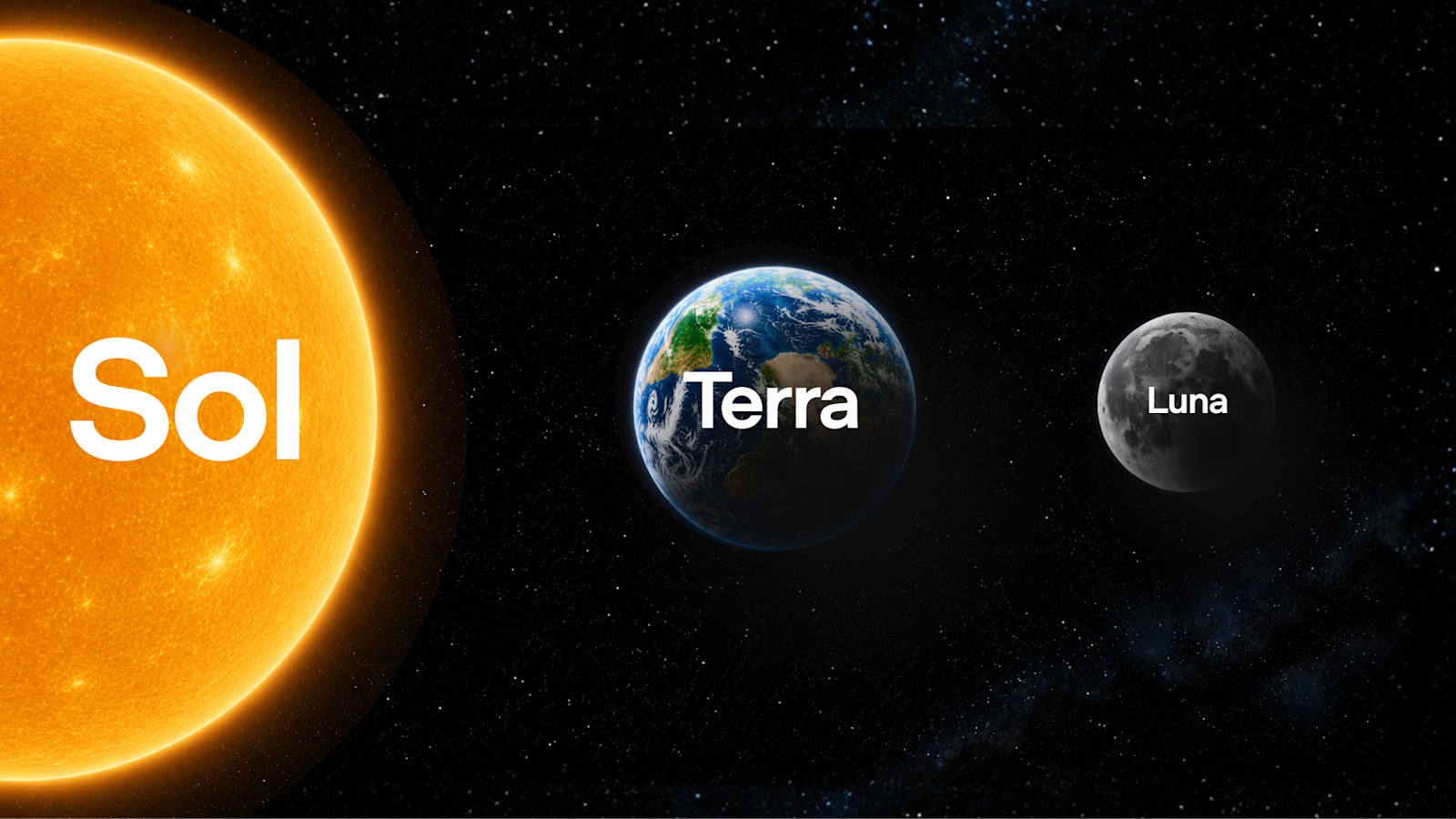
But if our time in the space industry has taught us anything, it is to be wary of…

But if our time in the space industry has taught us anything, it is to be wary of conflating the way things are done with the way things ought to be done. Over the past 20 years, the space industry has been upended by companies like SpaceX that care little about precedent — Elon Musk famously fired the original Starlink executive team for their traditionalism and associated slowness — and given SpaceX’s success, the space world must surely have learned the difference between a physical law and an industry convention.
Jun 23, 2026 • 11:55 AM