New Artha venture for top portfolio startups exceeds target: Artha India Ventures has successfully closed its new Artha Select Fund at Rs 432 crore, with plans to invest in 12–14 startups over the next four years across spacetech, fintech infrastructure, premium consumer goods, and applied AI.
DDD was introduced in Eric Evans’ classic book “Domain-Driven Design: Tackling Complexity in the Heart of Software”. It explained a methodology to model a complex business. In this book, there is a lot of content, so I'll summarize the basics.
The composition of domain objects:
Entity: a domain object that has ID and life cycle. Value Object: a domain object without ID. It is used to describe the property of Entity. Aggregate: a collection of Entities that are bounded together by Aggregate Root (which is also an entity). It is the unit of storage. The life cycle of domain objects:
Repository: storing and loading the Aggregate. Factory: handling the creation of the Aggregate. Behavior of domain objects:
Domain Service: orchestrate multiple Aggregate. Domain Event: a description of what has happened to the Aggregate. The publication is made public so others can consume and reconstruct it. Congratulations on getting this far. Now you know the basics of DDD. If you want to learn more, I highly recommend the book. It might help to simplify the complexity of software modeling.
Over to you: do you know how to check the equality of two Value Objects? How about two Entities?
:pushpin: What’s happening: Figma CEO Dylan Field says AI is erasing the hard borders between design, product, dev, and even research—making “generalist behavior” not just viable but valuable. The talk comes on the heels of Figma’s IPO pop and echoes Marc Andreessen and Vinod Khosla’s advice: don’t marry a profession, marry adaptability. :brain: How this hits reality: AI flattens workflows—what used to be a relay race between siloed roles is now a shared Figma file with AI auto-filling the gaps. Specialists still matter, but the moat shifts to those who can span the stack, curate across domains, and lead multidisciplinary teams. The org chart? Less ladder, more web. :bellhop_bell: Key takeaway: In the AI era, your niche skill is safe—until a generalist with good taste and a GPT tab open takes your lunch.
AI infrastructure spending rivals 19th-century railroads
AI capital expenditure now represents roughly 2% of US GDP, according to analyst estimates based on Nvidia’s datacenter revenue. That’s around $520 billion annually, putting AI infrastructure spending within shouting distance of peak 19th-century railroad construction.
The scale becomes clearer when you consider that without AI datacenter investment, Q1 GDP contraction could have been closer to -2.1% instead of the mild downturn we actually saw. We’re essentially running a massive private sector stimulus program disguised as an AI buildout.
This explains one of the more puzzling aspects of the current economy. Despite tariffs, political uncertainty, and the usual economic headwinds, growth has held up better than expected. The answer appears to be that Big Tech is spending so aggressively on GPUs and datacenters that it’s masking underlying weakness.
The scale becomes clear when you look at individual company commitments. Microsoft plans $80 billion for AI datacenters in fiscal 2025, Amazon expects over $100 billion, Google allocated $75 billion and Meta budgeted $60-65 billion. Combined, these four companies alone are spending over $315 billion this year.
But that money is coming from somewhere else. Non-life science venture capitalists are primarily funding AI startups at present. Amazon recently announced cloud layoffs driven by spiraling AI costs. Manufacturing and traditional infrastructure are being starved for capital as it gets rerouted to data centers.
Even Xi Jinping is sounding the alarm, with 250+ datacenters under construction in China and the Chinese president threatening intervention.
The spending has already surpassed peak telecom capex during the dot-com bubble as a percentage of GDP.
The uncomfortable truth is that we’re building short-lived infrastructure on rapidly depreciating technology curves, not century-spanning railroads. And when this particular spending spree ends, the economic support it’s providing disappears with it.
A shadow was cast over the IT sector this past weekend, a shadow that falls across many segments of the economy. Tata Consultancy Services (TCS), India’s largest IT services exporter, has announced its decision to lay off 2% of its workforce, which equates to approximately 12,000 jobs. Here's a deep dive into what it means for TCS. But the implications of this move extend beyond TCS itself, particularly as many of those affected occupy middle to senior management roles.
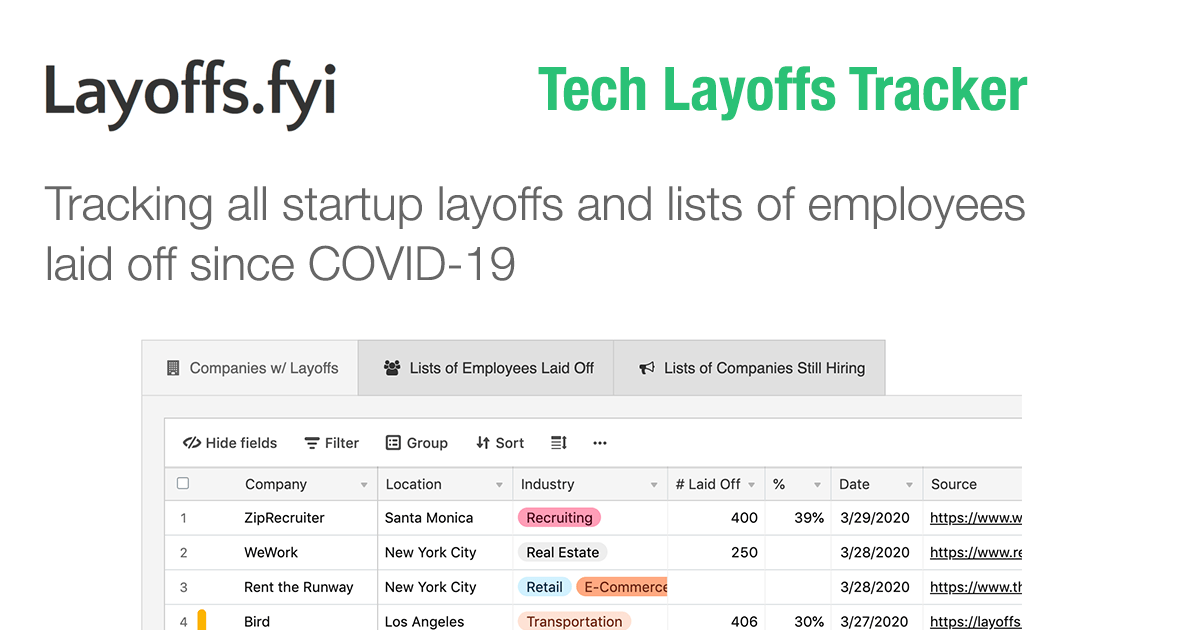
TCS is merely the latest in a line of IT firms succumbing to the pressures of technological advancements driven by artificial intelligence. According to Layoffs.fyi, which tracks job losses in the tech sector, over 80,150 technology professionals across 169 different companies have been let go in 2025 alone. Earlier this year, Microsoft announced a staff reduction of 15,000 employees, representing around 7% of its workforce. In July, Intel joined the fray, reporting mass layoffs that will result in approximately 5,000 job eliminations in the US. The current wave of layoffs follows 150,000 job losses across 551 technology firms in 2024.
The influence of AI on employment is becoming increasingly evident, and regretfully, we may be witnessing only the beginning of a larger trend. Reports suggest that 92% of IT jobs will experience significant or moderate transformation due to AI advancements. The most pronounced changes will impact mid-level (40%) and entry-level (37%) technology positions. Ford’s CEO, Jim Farley, predicts that AI could replace half of all white-collar jobs in the US. Similarly, Amazon’s CEO, Andy Jassy, acknowledged the inevitability of a smaller corporate workforce due to “once-in-a-lifetime” AI capabilities.
The potential for job displacement is staggering; according to Goldman Sachs, AI could jeopardise 300 million jobs globally. While the impact varies regionally, automation and AI technologies are expected to displace 21% of jobs in Asia by 2026, with the manufacturing sector being the most vulnerable. Jobs that involve repetitive tasks or simple data processing are particularly at risk, while positions requiring complex human interactions, creativity, and strategic thinking currently appear more secure. MIT research indicates that 2 million manufacturing jobs could be at risk by 2025, and as much as 30% of all jobs may be automatable by the mid-2030s. The finance sector, reliant on data-driven processes, faces similar threats, with many roles likely to be replaced by automation.
The consequences of these job cuts extend far beyond the IT sector. The layoffs of mid- and senior-grade employees, who represent significant consumers in the economy, could stifle spending and lead to a decrease in purchasing power. This fear-driven environment not only affects those who lose their jobs but also discourages remaining employees from making purchases due to concerns about their own job security.
The fallout from job losses in the IT sector has the potential to ripple through the broader economy. Declining consumer spending—an essential engine of economic growth—can lead to diminished demand for goods and services, resulting in further production cuts, additional layoffs, and eventual economic stagnation. The repercussions could extend to significant sectors, including real estate, automotive sales, bank and NBFC lending, and even leisure spending, raising concerns about the impact on investment patterns. In tech hubs like Bengaluru, landlords are already reconsidering lease renewals for tech tenants, with many uncertain about extending agreements due to rising instability.
These job losses could also have long-term effects on innovation and venture capital investment, hindering economic growth and diminishing competitiveness for years to come. Besides the impact on consumption, job losses can also impact investing. The first sign of a slowdown will be seen in the reduced inflows in systematic investment plans in mutual funds. The domino effect of job cuts in high-paying middle and senior-level employees in the IT sector is a speed bump that can slow down economic growth.