



Multi-Agent Orchestration: The Next Layer of Enterprise Intelligence
Multi-Agent Orchestration transforms enterprise AI from isolated automation to coordinated intelligence, where autonomous agents collaborate, learn, and adapt continuously, creating self-optimizing, resilient, and intelligent ecosystems that evolve with enterprise goals.
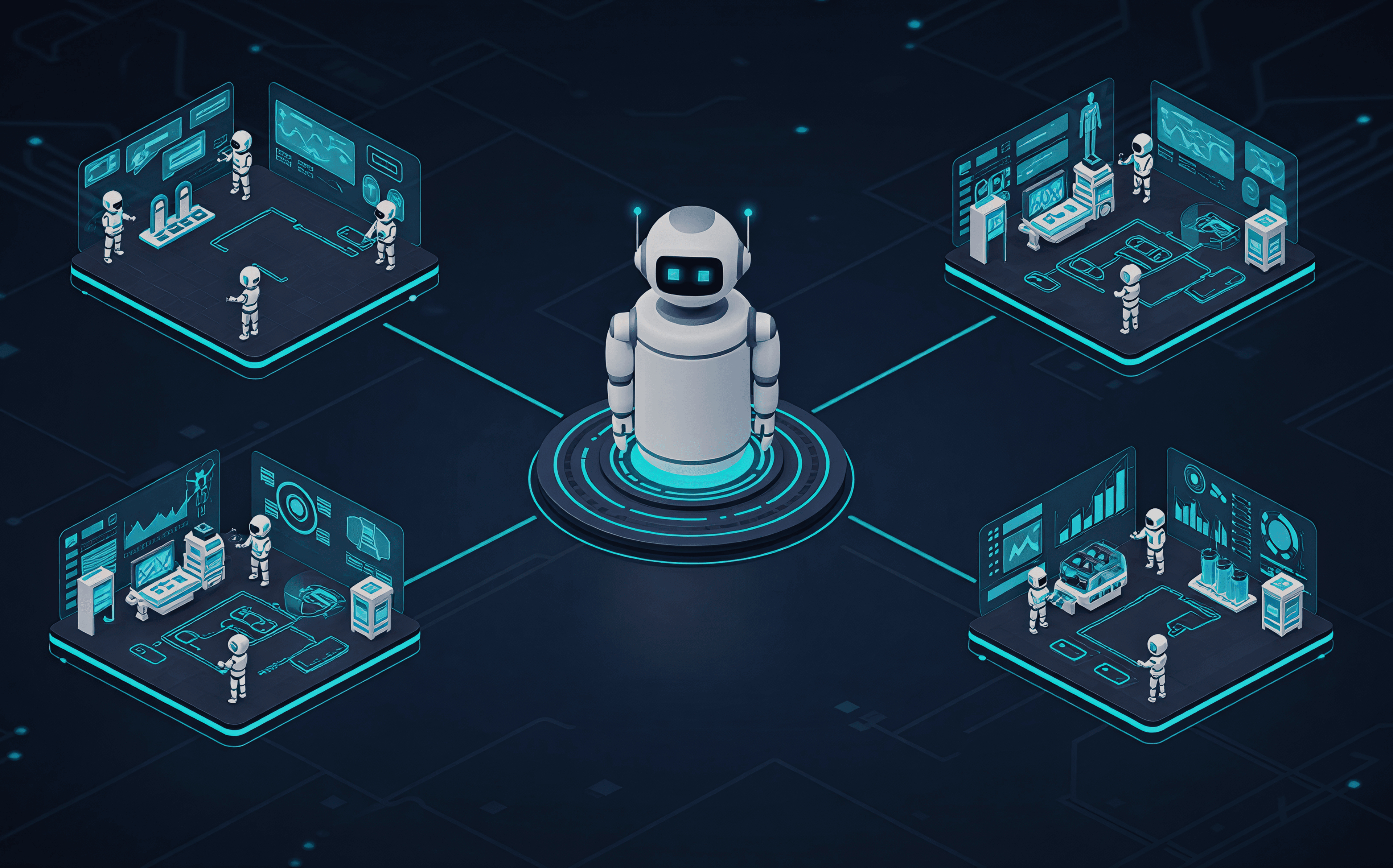
We’ve spent years teaching machines to think. Now, we’re teaching them to work together.
AI has mastered individual brilliance – a model that can write, another that can analyze and one that can predict. But brilliance without coordination creates noise, not progress. Just as enterprises thrive on coordinated teams rather than isolated talent, AI’s next leap comes not from smarter agents, but from their seamless collaboration.
That’s where Multi-Agent Orchestration comes in – a system where autonomous agents don’t just act, they collaborate, aligning every decision toward a shared goal.
As large language models and autonomous agents advance, the ability to integrate them into a unified, goal-oriented network will unlock significant enterprise value. Multi-Agent Orchestration is emerging as the backbone of enterprise autonomy, enabling enterprises to not just automate tasks, but to fundamentally shape their decision-making and behavior in the AI age. The true advantage in enterprise AI is now orchestration of multiple agents.
Architecture of Multi Agent Orchestration
Multi-Agent Orchestration creates that missing link. It gives structure to intelligence. In a well-engineered multi-agent system, at the edge sits the Interface, interpreting user intent and managing ambiguity. The Planner defines the strategic roadmap, decomposing enterprise goals into modular subtasks and dependencies that specialized agents can execute. The Orchestrator functions as the execution engine, dynamically assigning roles, monitoring progress, and resolving conflicts. Around it, Specialized Agents operate as microservices of intelligence: each fine-tuned for its domain yet capable of self-optimization through shared feedback.
A Shared Memory Layer maintains context and continuity, enabling cross-agent learning, traceability, and persistent state awareness. Overseeing all this is the Governance and Observability Layer, ensuring every interaction aligns with compliance, security, and organizational intent.
These layers collectively transform orchestration into a strategic powerhouse. Multi-Agent Orchestration becomes the enterprise's autonomy operating system, where intelligence is not just executed, but dynamically governed, contextualized, and optimized. This turns AI into a unified, adaptive ecosystem that drives resilience, agility, and strategic advantage – far beyond a set of advanced tools.
Benefits of Multi-Agent Orchestration
When enterprises shift from isolated agents to orchestrated systems, intelligence becomes a dynamic, distributed, and self-improving asset. By using Multi-Agent Orchestration, a living layer of cognition is created across the enterprise, enabling systems to work together seamlessly. The key benefits are:
- Seamless Scalability: New agents across finance, service, or IT integrate effortlessly, allowing systems to expand without friction or performance loss.
- Build Resilience: Distributed orchestration removes single points of failure. If one agent falters, others redistribute the load automatically..
- Adaptive Intelligence: Agents can reassign roles, interpret new data, and evolve strategies in real time as markets, demands, or regulations shift.
- Learn Collectively: Shared context and memory transform isolated insights into institutional intelligence that strengthens every decision.
- Tangible Business Impact: Faster execution, leaner operations, and superior customer experiences turn orchestration into a long-term competitive advantage.
Together, these benefits redefine how enterprises approach scalability, intelligence, and adaptability. But their true impact emerges when these agents don't just coexist, but collaborate seamlessly.
Why It Matters for Enterprises
Automation executes; orchestration understands. Where automation ends at efficiency, orchestration begins at intelligence.
Enterprises are no longer just automating, they are building adaptive ecosystems. In orchestrated enterprises, intelligence isn’t deployed; it’s distributed, coordinated, and continuously learning.
This architecture transforms how enterprises operate:
- Decisions become faster and data-driven.
- Processes adapt automatically to context shifts.
- AI agents coordinate across silos, improving both speed and quality of output.
- Intelligence compounds across systems, turning every action into organizational learning.
The result is a new class of enterprise intelligence, one where operations become predictive, decision cycles compress, and innovation compounds. Human and synthetic workforces no longer function in parallel; they co-evolve, sharing context, memory, and purpose. Every interaction enriches the organization’s collective intelligence, turning daily execution into continuous learning.
In this orchestrated future, the enterprise doesn’t just operate — it adapts, anticipates, and evolves.
Final Thoughts
When machines begin to coordinate, enterprises don’t just scale operations, they scale understanding. Because the future of intelligence isn’t about building one perfect agent. It’s about teaching many agents to think as one.
The question is no longer “will enterprises undergo this transformation?” but “who will orchestrate it first?”
Delay isn’t neutral. As ecosystems grow more interconnected, the cost of retrofitting orchestration later will far outweigh the effort of adopting it now. Early movers will define the standards of intelligent coordination, while late adopters risk operating in fragmented, inefficient systems. The orchestration era will redefine enterprise advantage not through faster algorithms, but through synchronized intelligence. Those who build systems that think together will outpace those who merely automate apart.
At M37Labs, we believe the future of AI isn’t singular - it’s orchestral. Multi-Agent Orchestration is the foundation for enterprises that don’t just automate but collaborate intelligently at scale.